Showing posts with label child safety. Show all posts

28 Feb 2021

NATIONAL GIRL CHILD DAY


In the year 2008, the Ministry of Women and Child Development observed the first National Girl Child Day on 24th January with an aim to highlight inequalities and gender discrimination issues faced by a girl child at various milestones in her life. Through this initiative, the Ministry endeavours to spread awareness about the rights of girl children, including the right to education, nutrition and health.

 The theme of the National Girl Child Day 2021 is to raise awareness about the issue of declining Child Sex Ratio (CSR). Across the country, several events were organised to commemorate this day. The  government also put emphasis on Beti Bachao Beti Badhao Scheme and several other schemes focusing on girl child empowerment on the national girl child day.

CHILDLINE 1098, India’s one and only emergency, 24-hour, toll-free helpline for children in distress has left no stone unturned to celebrate this day. Despite the pandemic, all the CHILDLINE partners across the country organised several events with all the COVID-19 protective and social distancing measures.

CHILDLINE plays an important role in the district level task force constituted for Beti Bachao Beti Badhao Scheme to advocate and create awareness among the community people. The teams represent at the district level during the meetings organised for Beti Bachao Beti Badhao scheme.

On the occasion of the girl child day, CHILDLINE Faridabad, Haryana organised an event and a meeting for children in Mirzapur slums. The children danced, created artworks including rangoli to celebrate the occasion. The CHILDLINE team motivated the children and distributed several prizes among them. In Jammu and Kashmir, CHILDLINE Anantnag organised a mass awareness event on the occasion where at least 45 girls along with the ICDS (Integrated Child Development Scheme) workers, local village committee members participated. The CHILDLINE team spread awareness about the services of CHILDLINE 1098 and the importance of a girl child and issues faced by them. CHILDLINE Bundi, Rajasthan celebrated national girl child day with children from shelter homes and slum areas and conducted a meeting with police officers on child rights and child issues.

Across 25 districts of Telangana, CHILDLINE celebrated national girl child’s day on 24th, 25th and 26th January 2021 through different activities and events. A total of 351 officials and stakeholders from allied departments including ICDS and Panchayat Raj along with 1326 children and 602 adults participated. CHILDLINE Tirupati, Andhra Pradesh organised a National Girl Child Day programme at a shelter home in a village. Through this programme, the team discussed the CHILDLINE 1098 services, the importance of girl child education and the disadvantages of child marriage.

In Maharashtra, CHILDLINE Dhule celebrated the national girl child day in a special abled girl’s shelter home. The chief guests of the programme guided the girls about the objectives and the importance of the girl’s rights and education. In Kolhapur, CHILDLINE celebrated the girl child day in Ingavale Mala, Kuchkovari with 36 children.

In West Bengal, almost all the districts celebrated the national girl child day with great pomp and splendour. CHILDLINE Alipurduar distributed winter clothes among the children. An open house programme was organised by CHILDLINE Darjeeling at a school in Kurseong. Railway CHILDLINE Asansol also conducted an open house programme with the nearby local children. In the CHILDLINE advisory board meeting of 2020-21 in Bishnupur, West Bengal, Beti Bacchao Beti Padhao campaign was flagged off, link- https://www.youtube.com/watch?v=jXc0SAPcl4k


4 Feb 2021

IMPORTANCE OF FAMILY IN A CHILD'S LIFE


From the moment when children are born, they are dependent on their parents for every need. Parents play a pivotal role in giving every child an essential social unit, a family. Children learn to utter their first words, develop their language, their values i.e. sanskaars and skills from their family. Hence, it would not be entirely incorrect to say that the family is the first school of any child.

According to UNICEF, every child has the right to grow in a family environment that promotes holistic growth and development. However, worldwide over 2.7 children are raised in institutional care. Children who grow up in an institution are at the risk of physical, social and emotional harm with consequences that can last a lifetime. In institutions, there are very few caretakers or providers for a large number of children. Institutions often fail to provide an environment where a child feels emotionally secure and loved. Such children are more likely to become victims of abuse and violence.

Research suggests that children who do not experience direct parental care during their growing years mature at a slower rate and are more likely to have a poor intellectual quotient. Thus, children succeed where they experience positive growth and complete development.

According to experts, it is important to interact with children and spend quality time with them. It is through such qualitative interactions children can adopt essential values from their parents and learn from their experiences. Parents too can learn about various strengths and weaknesses their children possess and enable them with sufficient support and guidance making them confident and resilient.

Organisations like CHILDLINE 1098, India’s only 24-hour, emergency, toll-free helpline for children in distress play a great role in reinforcing the importance of a family in a child’s life. Over the years, they have rescued and protected thousands of missing, runaway children, victims of child abuse, child marriage, child labour, trafficking and beggary and restored them with their families. During the pandemic, CHILDLINE restored 4735 children with their families.

Lastly, Aristotle, the legendary Greek philosopher said, “Man is by nature a social animal; an individual who is unsocial naturally and not accidentally is either beneath our notice or more than human. Society is something that precedes the individual”. An individual cannot break the bonds of mutual dependence in the family or society. This probably develops in the womb with the mother and continues till the last breath.


31 Jan 2021

CHILDLINE RESCUES A CHILD BEGGAR FROM THE STREETS


A local news channel telecasted a story of a 10-year-old girl Nayna (name changed to protect identity) from the location where she was begging. Upon receiving the news, CHILDLINE Guwahati, Assam contacted the reporter of the news channel for more details.  Next day, along with the reporter and Dispur Traffic Police Outpost officials went to the house of the girl for further enquiry.

Nayna was the student of 5th Standard. Her mother worked as a domestic help in different households to meet their daily expenses.  However, the mother met with an accident and fractured her hand. Hence, she was unable to go to work. The lockdown had further worsened their situation as there was insufficient food at home. Therefore, the child started begging on the streets.

The officials from the Dispur Traffic out Post provided emergency relief to the family. CHILDLINE team ensured that her case will be looked into and she and her mother will be assisted with all the possible facilities. Meanwhile, CHILDLINE is trying to link Nayna with the sponsorship scheme under the Integrated Child Protection Scheme (ICPS).

Child begging is the worst violation of child rights and absolutely against a child’s dignity. Therefore, all the state and civil authorities as well as the civil society to unite and end this menace forever.

If you come across any child begging on the streets, please do not hesitate to call CHILDLINE 1098 and report a case. 

26 Jan 2021

VICTIMS OF CHILD LABOUR RESCUED AND REHABILITATED


CHILDLINE Faridabad, Haryana received information about children who were working as child labourers at a chicken and egg shop. However, on reaching the location, the team did not find any children. Upon following up with the caller, the team learnt that the children came to work only in the night. The caller also shared photographic evidence. When CHILDLINE visited again, the team found three children aged 14 to 17 years working at the shop.

During the counselling session, CHILDLINE learnt that the children were school dropouts. An FIR was registered against their employer under the JJ Act and then they were presented before the CWC (Child Welfare Committee). The CWC ordered that they undergo a medical test and be given temporary shelter at Karm Marg. The next day, the children were handed over to their parents, who were also counselled.

Children engaged in child labour are deprived of dignity and childhood. Such children are unable to go to school often remain illiterate for the rest of their lives. Child labour is harmful to their overall development and mental health.

Therefore, if you come across a child engaged in child labour please do not hesitate to call CHILDLINE 1098.

22 Jan 2021

CHILDLINE JOINS A COVERT OPERATION TO RESCUE A 14-YEAR OLD FROM THE TRAFFICKERS


Thane CHILDLINE, Maharashtra received a call from Mission Mukti for assistance to rescue a 14 year-old girl confined at a warehouse in Thane district. CHILDLINE shared all the documents received from Mission Mukti with CWC (Child Welfare Committee), DCPU (District Child Protection Unit) and Sr. Police Inspector of the local police station.  The same evening, NCPCR (National Commission for Protection of Child Rights) contacted CHILDLINE and confirmed the case of trafficking and sought assistance in the joint rescue operation conducted by the NCPCR and Mission Mukti. The NCPCR also shared the case details with CWC and DWCD (Department of Women and Child Development).  CHILDLINE was requested to coordinate with the CWC. 

The joint team of CHILDLINE, Mission Mukti and DCPO met the Sr. police Inspector at the police station to draw up a rescue plan. One senior officer and three Women Police Constables were assigned to join the rescue operation team. The team split into two groups and approached the location of the girl. After combing the area, the girl was found near the gate and taken into custody. The trafficker’s father who was also taken into custody summoned his son on to come to the Labour Camp on the phone. All of them were taken to the police station. 

The girl's statement was recorded at the police station. She revealed that the trafficker had brought her from West Bengal and married her. The CWC was informed about the girl’s rescue over the phone and as per their directions, she was admitted to the Amche Ghar, Shelter Home for girls. Then, the girl was presented before the CWC and is presently staying at the Shelter Home. The accused has been handed over to the West Bengal Police for further action.  The case is still going on.   

Child trafficking is one of the worst forms of modern-day slavery and child abuse. Each year, thousands of children are tricked, persuaded or forced to leave their homes and put their lives at risk in the worst and unimaginable ways. The victims are kept in inhuman conditions and forced into heinous and criminal activities.   

As a society, we need to come together to end this menace and safeguard the future of our children. Please call CHILDLINE 1098, if you come across a case of child trafficking.

13 Jan 2021

CHILDLINE AND CYBER POLICE WORK TOGETHER ON OPERATION P-HUNT


A 26-year-old man was caught by the Cyber Police as part of Operation P-Hunt, a covert operation to nab people involved in child pornography. Many photos of children were recovered from his phone, and it also came to light that he was sexually abusing his niece, a young girl of 9 years. The police approached CHILDLINE Trivandrum, Kerala and requested support in counselling the child, as she was scared to talk to the police.

Upon counselling the child, CHILDLINE learnt that her uncle used to harass her when her mother and sister were not at home. He would also accompany her on the pretext of visiting the dentist and abuse her. He also went on to blackmail the child, stating that he would get caught by the police if she revealed what was happening. CHILDLINE also provided emotional support and guidance to the child and prepared her for the case proceedings.

The police also expressed their gratitude to the CHILDLINE team for their child-friendly approach and professionalism. Child pornography is one of the major detrimental side-effects of the development of digital technology. It has become a serious problem worldwide. Kerala police launched a covert surveillance operation P-hunt to curb this menace. Under this initiative, the police have arrested people involved in sharing and posting of child pornography.

Currently, Kerala police are monitoring the digital viewing and sharing of pornographic material round the clock and have reported an alarming rise of this heinous activity.

24 Sept 2020

DIGITAL EDUCATION: STILL A DISTANT DREAM FOR MANY?


The Coronavirus pandemic has severely affected the traditional brick and mortar education in schools and colleges across the globe. India is no exception. It has led to an exponential growth of digital education throughout the country. Everywhere, the teachers are recording their lectures and uploading of social media platforms like YouTube and sharing links on WhatsApp groups or teaching via various mobile applications.

However, are Indians parents equipped with proper infrastructure to facilitate digital education for their children? Or will the students from rural and urban India gain equal access to online education?  The students in metropolitan cities clearly have an advantage of better infrastructure and long conducive learning hours for online education. The parents are in a better position to facilitate their children with digital learning mediums.

But in rural India, the digital education remains a distant dream for many. Recently, the CHILDLINE 1098 team in Haryana, Mewat district rescued a child working on a construction site. Upon counseling the child revealed that his school is conducting classes online, to which neither he nor anyone in his family owns a smartphone.  In order to buy a smartphone and study better in the future the child was working at the construction site. The child was presented before the Child Welfare Committee (CWC) who handed over the child to his parents after the due diligence process. After few weeks, CHILDLINE visited the child’s place. The child, a student of 8th Std., was at home and studying. This case is a true reflection of the ground reality of the digital education in India.

On further discussion with principals of Govt. and private schools regarding online classes, it was revealed that, in Govt. schools, teachers have formed WhatsApp groups to provide online education to students. However, it has been observed that only a handful of students have benefitted from this education opportunity. Nearly, 70 percent of the students are unable to access online education. In private schools only 50 percent of the children are able to access online education. This is mainly due to the lack of infrastructure or internet connectivity.

In some cases, only one parent has a smartphone which they take to work and children have to wait till that parent returns home. In households with only one smartphone, gender disparity is hugely prevalent. The male child is given priority over the female child to access the smartphone. The stakeholders from the education department are trying to provide education to all the children during the lockdown however due to lack of infrastructure; many children are unable to access the learning mediums.

The local Sarpanchs and village heads can play a great role in facilitating digital education for children. They can help set up proper Wi-Fi system and help children with smartphones or computers in the common spaces for children. Organizations like CHILDLINE 1098 can work as a catalyst and help identify resource organizations to facilitate digital education so that no child will have to engage in child labour for online education.

27 Jul 2020

ONE MORE FAMILY RESCUED FROM THE BRINK OF STARVATION


In an attempt to control the spread of the Coronavirus, the Government of India has announced a complete lockdown. While this precautionary measure is helping to control the spread of this contagious virus, it has led to the rise of major crises for daily wage earners and migrant workers.

They are the worst sufferers of the side effects of the lockdown. They usually live hand-to-mouth and without their daily earnings, they can barely provide for their family. Currently, most of the daily wage earners and migrant workers are out of jobs. It has become extremely difficult for them to feed their family.

CHILDLINE 1098 received a call from a helpless father whose three children have been starving for 3 days. Hailing from Gorakhpur, Uttar Pradesh, Prashant Sinha (name changed to protect identity) came to Vapi, Gujarat nine years ago to work in a tailoring company. Five months ago, he brought his 3 children, Samir age 11 years, Akash age 6 years and Vikram 4 years old (names changed to protect identity) to his residence in Vapi-Valsad.

During the initial days, of the COVID -19 outbreak, the factory owner gave the father some money and necessities. But soon they ran out of resources and the money. The CHILDLINE team member working on this case coordinated with the district administration authorities to arrange for ration and food items for the family.

Within no time, the DSP of Valsad sent his team with all the ration and food items to the family. Upon receiving groceries from the police, the father immediately informed CHILDLINE and thanked for co-coordinating and arranging for food. 

In these challenging times, CHILDLINE is receiving thousands of calls from children and parents who need help to buy ration and food items. You too can join hands with CHILDLINE 1098 and help us fulfil their needs.


23 Jun 2020

COVID-19: DO'S AND DON'TS OF WEARING A MASK


Corona virus and the subsequent lock down have wreaked havoc in our lives. People have to wear a mask and adhere to various preventive measures for simple daily chores like going out to buy groceries, medical supplies or even fill fuel in our cars. While wearing a mask is important, there are certain rules that must be followed. The World Health Organization (WHO) has given several guidelines for the rational use of a mask to protect oneself from infection.

The list of Do’s and Don’ts of wearing a mask:

Do’s

  •  It is important to clean your hand with soap and water or sanitizer before wearing a mask.
  • Cover your nose and mouth with the mask and make sure that there are no gaps between your face and mask.
  • Replace the mask as soon as it becomes damp and do not reuse single use masks.
  • To remove the mask, remove it from behind, (do not touch the front of the mask) and  discard it immediately in a closed bin and wash your hands with soap and water or  sanitizer.
  • You need to wear a mask, if you are taking care of a COVID-19 patient or a sick patient.
  •  Masks are most effective when used in combination with soap and water or sanitizer.


Don’ts

  •          Do not use ripped or damp mask.
  •         Do not wear a mask only over your nose or mouth.
  •          Do not use loose fitting mask.
  •         Do not touch the front of the mask.
  •         Do not remove your mask to talk to someone.
  •          Do not leave your mask within the reach of someone.
  •          Do not reuse masks.


Point to remember: Masks alone cannot protect you from COVID-19. Maintain at least 1 meter distance from others and wash your hands frequently and thoroughly even while wearing a mask

19 May 2020

CYBER SAFETY FOR CHILDREN: GUIDELINES FOR PARENTS


Children are spending a considerable amount of their time online, as schools are closed and no play-time with friends due to health-related concerns of COVID-19. This has become a major cause of concern for parents.
The internet is an ocean of information and entertainment. But every online activity or content is not safe for children. Many people share inappropriate content online that must not be viewed by children. Online predators can coerce gullible children into sharing their personal information or intimate photographs. Therefore, it becomes extremely crucial for every parent to monitor their child’s online activity. Here are some guidelines:
Limit your child’s screen time
It is a known fact that excessive screen time for children is highly detrimental to their overall well-being. Limiting the number of hours children can spend online, activities they can indulge online or what programs they can watch will enable you to keep an eye on your child.

Communication with children about online safety
An open conversation with children about inappropriate content and people online will make them responsible and vigilant. Explain to them, very clearly why they must not share their personal information with strangers online. Talking to your children will help you understand what type of content your child likes to see online. You can also suggest a few apps or websites that are safe for them.

Parental control software
Such softwares are not spying tools. However, they will help you set rules and limits for children and monitor their online activity. The parental control software like Google Family Link will enable you to monitor every device connected to your network and allow you to set device-specific schedules for your children.

Be a part of your child’s online activity

Co-play online games with your children. Sit with them when they are surfing random websites. This will be a great opportunity for you to closely monitor your child’s activities and spend quality time together.

Monitoring online activity has become very important, especially of children in rural areas as they are now educating themselves through online classes at community service centres. CHILDLINE 1098 has created a pool of resources and activities on their website that are safe for children. 


17 Mar 2020

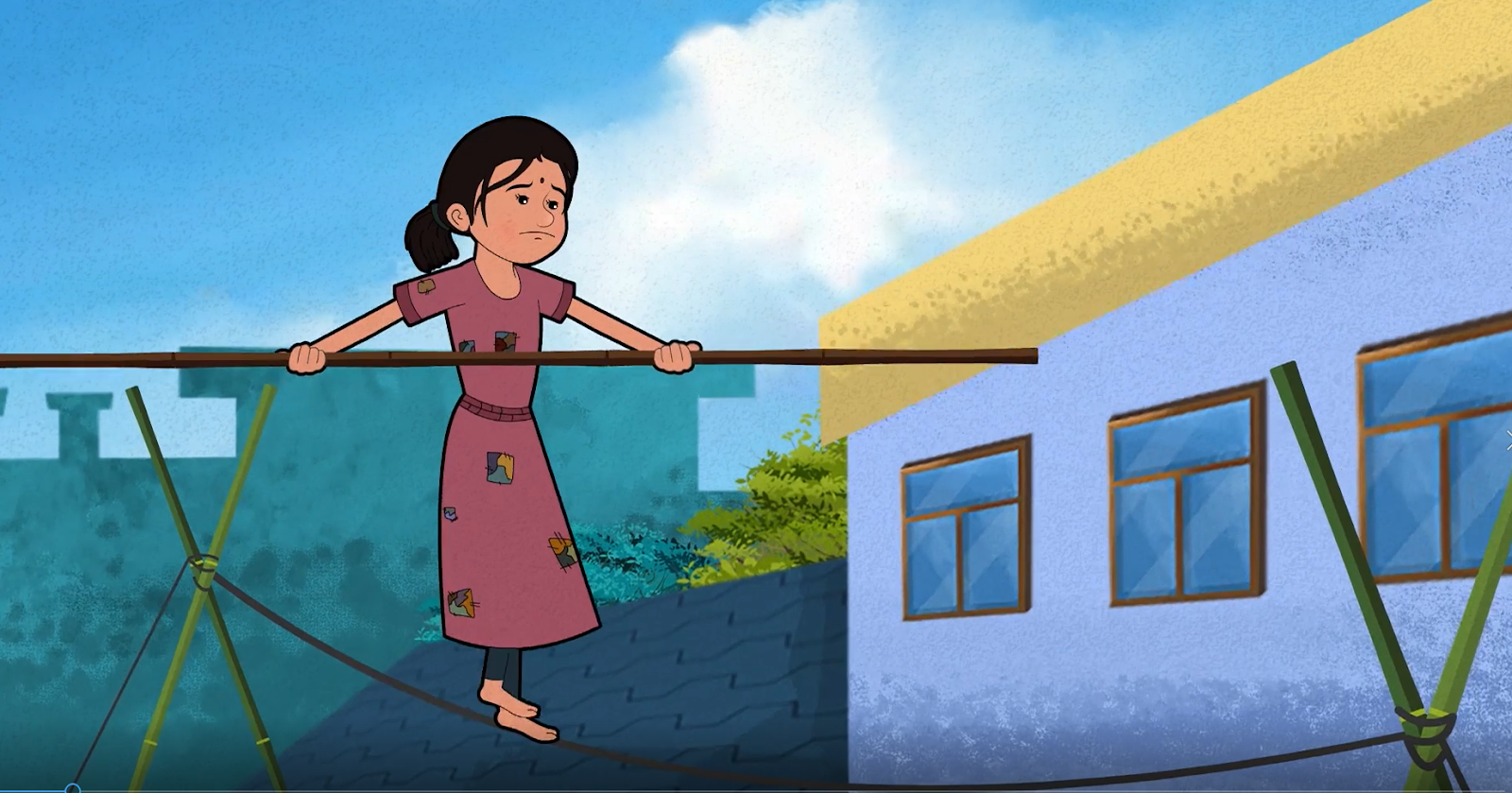
WHEN CHILDHOOD BECOMES A TIGHT ROPE WALK....


Funambulism or walking on a tight rope or wire is a common circus activity in many countries. The Funambulists train for years to balance themselves on a tight rope. In most countries, skilled adult artists perform in a circus equipped with adequate safety measures.

But in India, children as young as 5 years old are trained to walk on a tight rope tied on poles roadside often without sufficient safety measures.

In 2011, the Supreme Court banned circus activities like performing high wire stunts and juggling for children under the age of 14.  The Supreme Court also directed the Government to rescue children engaged in such activities and rehabilitate them. Despite the ban, children are engaged in such activities.

CHILDLINE received a call from a concerned adult on 1098 informing about a 5-year-old girl walking on the rope and performing dangerous stunts near the railway crossing, Mukthiyar Ganj, Satna, Madhya Pradesh.  The girl’s family was begging for money from people who gathered to see the activity.

On the basis of the information given by the caller, the local intervention unit rushed to the spot. The CHILDLINE team found that the entire family was engaged in rope circus activity. They informed the Child Welfare Committee and the District Child Protection Officer (DCPO) who ordered the CHILDLINE team to rescue the child as soon as possible. 

CHILDLINE brought the child and her family to the CHILDLINE office. During the counselling, the child revealed that she has been doing such stunts since last one year. The team produced the child and her family before the Child Welfare Committee (CWC).

The CWC members counselled the family. The chairperson of the CWC warned the family members of legal consequences if the child is found again working and performing dangerous stunts. The family assured CWC that they will take care of the child and enroll her in the school. The local police made arrangements for the child and her family to travel to their native place, Bilaspur, Chhattisgarh.

After a couple of months, CHILDLINE visited the child’s native place. But the child was not there. CHILDLINE does not have any idea about the whereabouts of the child or her family. The team sincerely hopes that the child is in a school and is not working or performing dangerous stunts.

If you come across any child being forced to work or perform any dangerous circus activity, please do not turn a blind eye. Immediately, call 1098 and report the matter.

Disclaimer:  Names and details have been changed to maintain confidentiality as required. 


14 Jan 2020

A CASE OF A 9-YEAR OLD BOY WHO RAN AWAY NOT ONCE BUT TWICE

Kids running away or going missing is every parents’ worst nightmare. Imagine, you wake up one morning to find your kid is missing from home or your kid goes out to play and does not return home. Isn’t it scary? What pushes a child to run away from home?

The children run away mainly because of family or guardian abuse, neglect, conflict with the law, city attraction, stress, etc. Following is a true-life case of a boy who ran away from his home not once but twice and was rescued by CHILDLINE. He is now in safe hands.

In December 2019, Child Help Desk at Chatrapati Shivaji Terminus (CST) received a case of a 9-year-old child, Ram (name changed) who had run away from his home. The boy was a resident of Kalyan in Mumbai suburbs. He appeared very calm and composed in CHILDLINE’s custody. Apparently, he was a repeat offender.

A couple of years ago, he ran away from his home due to major differences with his brother. He stated his brother would beat him up regularly. Back then, he wanted to go to the shelter home. However, as per the orders of the CWC, he was reunited with his parents and was sent home.

This time too, he ran away citing the same problem and was adamant to not want to go back to his family. He requested to be put up at the shelter home. CHILDLINE informed his parents and they arrived to meet him. The boy was then produced before the Child Welfare Committee (CWC). This time, however, his wish has been granted to reside at the shelter home. Currently, he and his parents are undergoing regular counselling at the shelter home.
In the year 2018-2019, CHILDLINE received about 31779 runaway cases amongst others. Of these 17811 i.e. 56 per cent were city attraction cases. About 5751 i.e. 18 per cent were runaway cases related to employment and 8217 cases i.e. 26 per cent were other cases like neglect, abuse, stress, 

Disclaimer:  Names and details have been changed to maintain confidentiality as required.