Showing posts with label Child Labour. Show all posts

28 Feb 2021

NATIONAL GIRL CHILD DAY


In the year 2008, the Ministry of Women and Child Development observed the first National Girl Child Day on 24th January with an aim to highlight inequalities and gender discrimination issues faced by a girl child at various milestones in her life. Through this initiative, the Ministry endeavours to spread awareness about the rights of girl children, including the right to education, nutrition and health.

 The theme of the National Girl Child Day 2021 is to raise awareness about the issue of declining Child Sex Ratio (CSR). Across the country, several events were organised to commemorate this day. The  government also put emphasis on Beti Bachao Beti Badhao Scheme and several other schemes focusing on girl child empowerment on the national girl child day.

CHILDLINE 1098, India’s one and only emergency, 24-hour, toll-free helpline for children in distress has left no stone unturned to celebrate this day. Despite the pandemic, all the CHILDLINE partners across the country organised several events with all the COVID-19 protective and social distancing measures.

CHILDLINE plays an important role in the district level task force constituted for Beti Bachao Beti Badhao Scheme to advocate and create awareness among the community people. The teams represent at the district level during the meetings organised for Beti Bachao Beti Badhao scheme.

On the occasion of the girl child day, CHILDLINE Faridabad, Haryana organised an event and a meeting for children in Mirzapur slums. The children danced, created artworks including rangoli to celebrate the occasion. The CHILDLINE team motivated the children and distributed several prizes among them. In Jammu and Kashmir, CHILDLINE Anantnag organised a mass awareness event on the occasion where at least 45 girls along with the ICDS (Integrated Child Development Scheme) workers, local village committee members participated. The CHILDLINE team spread awareness about the services of CHILDLINE 1098 and the importance of a girl child and issues faced by them. CHILDLINE Bundi, Rajasthan celebrated national girl child day with children from shelter homes and slum areas and conducted a meeting with police officers on child rights and child issues.

Across 25 districts of Telangana, CHILDLINE celebrated national girl child’s day on 24th, 25th and 26th January 2021 through different activities and events. A total of 351 officials and stakeholders from allied departments including ICDS and Panchayat Raj along with 1326 children and 602 adults participated. CHILDLINE Tirupati, Andhra Pradesh organised a National Girl Child Day programme at a shelter home in a village. Through this programme, the team discussed the CHILDLINE 1098 services, the importance of girl child education and the disadvantages of child marriage.

In Maharashtra, CHILDLINE Dhule celebrated the national girl child day in a special abled girl’s shelter home. The chief guests of the programme guided the girls about the objectives and the importance of the girl’s rights and education. In Kolhapur, CHILDLINE celebrated the girl child day in Ingavale Mala, Kuchkovari with 36 children.

In West Bengal, almost all the districts celebrated the national girl child day with great pomp and splendour. CHILDLINE Alipurduar distributed winter clothes among the children. An open house programme was organised by CHILDLINE Darjeeling at a school in Kurseong. Railway CHILDLINE Asansol also conducted an open house programme with the nearby local children. In the CHILDLINE advisory board meeting of 2020-21 in Bishnupur, West Bengal, Beti Bacchao Beti Padhao campaign was flagged off, link- https://www.youtube.com/watch?v=jXc0SAPcl4k


31 Jan 2021

CHILDLINE RESCUES A CHILD BEGGAR FROM THE STREETS


A local news channel telecasted a story of a 10-year-old girl Nayna (name changed to protect identity) from the location where she was begging. Upon receiving the news, CHILDLINE Guwahati, Assam contacted the reporter of the news channel for more details.  Next day, along with the reporter and Dispur Traffic Police Outpost officials went to the house of the girl for further enquiry.

Nayna was the student of 5th Standard. Her mother worked as a domestic help in different households to meet their daily expenses.  However, the mother met with an accident and fractured her hand. Hence, she was unable to go to work. The lockdown had further worsened their situation as there was insufficient food at home. Therefore, the child started begging on the streets.

The officials from the Dispur Traffic out Post provided emergency relief to the family. CHILDLINE team ensured that her case will be looked into and she and her mother will be assisted with all the possible facilities. Meanwhile, CHILDLINE is trying to link Nayna with the sponsorship scheme under the Integrated Child Protection Scheme (ICPS).

Child begging is the worst violation of child rights and absolutely against a child’s dignity. Therefore, all the state and civil authorities as well as the civil society to unite and end this menace forever.

If you come across any child begging on the streets, please do not hesitate to call CHILDLINE 1098 and report a case. 

26 Jan 2021

VICTIMS OF CHILD LABOUR RESCUED AND REHABILITATED


CHILDLINE Faridabad, Haryana received information about children who were working as child labourers at a chicken and egg shop. However, on reaching the location, the team did not find any children. Upon following up with the caller, the team learnt that the children came to work only in the night. The caller also shared photographic evidence. When CHILDLINE visited again, the team found three children aged 14 to 17 years working at the shop.

During the counselling session, CHILDLINE learnt that the children were school dropouts. An FIR was registered against their employer under the JJ Act and then they were presented before the CWC (Child Welfare Committee). The CWC ordered that they undergo a medical test and be given temporary shelter at Karm Marg. The next day, the children were handed over to their parents, who were also counselled.

Children engaged in child labour are deprived of dignity and childhood. Such children are unable to go to school often remain illiterate for the rest of their lives. Child labour is harmful to their overall development and mental health.

Therefore, if you come across a child engaged in child labour please do not hesitate to call CHILDLINE 1098.

13 Jan 2021

CHILDLINE AND CYBER POLICE WORK TOGETHER ON OPERATION P-HUNT


A 26-year-old man was caught by the Cyber Police as part of Operation P-Hunt, a covert operation to nab people involved in child pornography. Many photos of children were recovered from his phone, and it also came to light that he was sexually abusing his niece, a young girl of 9 years. The police approached CHILDLINE Trivandrum, Kerala and requested support in counselling the child, as she was scared to talk to the police.

Upon counselling the child, CHILDLINE learnt that her uncle used to harass her when her mother and sister were not at home. He would also accompany her on the pretext of visiting the dentist and abuse her. He also went on to blackmail the child, stating that he would get caught by the police if she revealed what was happening. CHILDLINE also provided emotional support and guidance to the child and prepared her for the case proceedings.

The police also expressed their gratitude to the CHILDLINE team for their child-friendly approach and professionalism. Child pornography is one of the major detrimental side-effects of the development of digital technology. It has become a serious problem worldwide. Kerala police launched a covert surveillance operation P-hunt to curb this menace. Under this initiative, the police have arrested people involved in sharing and posting of child pornography.

Currently, Kerala police are monitoring the digital viewing and sharing of pornographic material round the clock and have reported an alarming rise of this heinous activity.

24 Sept 2020

DIGITAL EDUCATION: STILL A DISTANT DREAM FOR MANY?


The Coronavirus pandemic has severely affected the traditional brick and mortar education in schools and colleges across the globe. India is no exception. It has led to an exponential growth of digital education throughout the country. Everywhere, the teachers are recording their lectures and uploading of social media platforms like YouTube and sharing links on WhatsApp groups or teaching via various mobile applications.

However, are Indians parents equipped with proper infrastructure to facilitate digital education for their children? Or will the students from rural and urban India gain equal access to online education?  The students in metropolitan cities clearly have an advantage of better infrastructure and long conducive learning hours for online education. The parents are in a better position to facilitate their children with digital learning mediums.

But in rural India, the digital education remains a distant dream for many. Recently, the CHILDLINE 1098 team in Haryana, Mewat district rescued a child working on a construction site. Upon counseling the child revealed that his school is conducting classes online, to which neither he nor anyone in his family owns a smartphone.  In order to buy a smartphone and study better in the future the child was working at the construction site. The child was presented before the Child Welfare Committee (CWC) who handed over the child to his parents after the due diligence process. After few weeks, CHILDLINE visited the child’s place. The child, a student of 8th Std., was at home and studying. This case is a true reflection of the ground reality of the digital education in India.

On further discussion with principals of Govt. and private schools regarding online classes, it was revealed that, in Govt. schools, teachers have formed WhatsApp groups to provide online education to students. However, it has been observed that only a handful of students have benefitted from this education opportunity. Nearly, 70 percent of the students are unable to access online education. In private schools only 50 percent of the children are able to access online education. This is mainly due to the lack of infrastructure or internet connectivity.

In some cases, only one parent has a smartphone which they take to work and children have to wait till that parent returns home. In households with only one smartphone, gender disparity is hugely prevalent. The male child is given priority over the female child to access the smartphone. The stakeholders from the education department are trying to provide education to all the children during the lockdown however due to lack of infrastructure; many children are unable to access the learning mediums.

The local Sarpanchs and village heads can play a great role in facilitating digital education for children. They can help set up proper Wi-Fi system and help children with smartphones or computers in the common spaces for children. Organizations like CHILDLINE 1098 can work as a catalyst and help identify resource organizations to facilitate digital education so that no child will have to engage in child labour for online education.

12 Aug 2020

LIFE SAVING SUPPORT FOR A NEW BORN DURING LOCK DOWN


During the lock down, in the wake of the COVID-19 pandemic, each and every individual must be vigilant and careful. However, in the case of pregnant women or women who have just delivered a baby with complications, needs to be extra careful and reach out to the right authorities for the necessary precautions and care.

On 4th May 2020, CHILDLINE Kochi, Kerala received a call from a father reporting about his 10-day old new born baby’s need for immediate medical support. The baby was born at a general hospital in Ernakulum. Due to breathing problems, the baby was put on a ventilator and referred to Lakshmi hospital. As per the medical report, the baby was suffering from breathing problems coupled with a neurological condition and bleeding in the head.  The child was suffering with hydrocephalus and was in a very critical condition.  For urgent medical intervention the child was taken from Lakshmi Hospital, Ernakulum to Kottayam Medical College (KMC), Kottayam.

The parents also requested for help in settling bills at Lakshmi Hospital, before the discharge. CHILDLINE informed the Child Welfare Committee (CWC) Chairperson. On the same day, CHILDLINE coordinated for all the necessary services and transferred the baby to KMC. In this case, CHILDLINE received unconditional support from IMA (Indian Medical Association) Kochi Chapter and NRHM (National Rural Health Mission) for providing the ambulance and medics to transfer the child to KMC.

On 5th May 2020, CHILDLINE paid the bills at Lakshmi Hospital. Two members from the CHILDLINE team accompanied the baby, medics and paramedics to KMC. On 8th May 2020, the father informed CHILDLINE about the gradual progress of the baby who has begun the natural process of breast feeding. The baby doesn’t require surgery, however, will need physiotherapy. The family thanked CHILDLINE for the timely intervention and support.


19 Mar 2020

A CALL CAN CHANGE A LIFE


As a part of the field action project, Ms Jeroo Billimoria, a then professor at Tata Institute of Social Sciences (TISS) would regularly interact with children living on railway stations and night shelters. Slowly, the children started calling her at any given time of day and night, when faced with crises. She would willingly answer their calls and help them.

Over some time, she realized that it would not be possible to respond to hundreds of children each day. After much deliberations and discussions, the idea of CHILDLINE 1098 was born - a single point of contact who would help children in their hour of need and afterwards. In the inception year itself, CHILDLINE clocked in 6000 calls.
.
Today, CHILDLINE receives nearly 25000 calls daily about children in need of care and protection. In the year 2018-2019 CHILDLINE received around 9 million calls.

Role of CHILDLINE in protecting children

v  When a child or a concerned adult call CHILDLINE 1098, the call is immediately routed to one of the six CHILDLINE Contact Centre (CCC) – a state-of-art facility with contemporary BPO facility.

v   If the CHILDLINE Contact Officer (CCO) receives a call for intervention, then the case is transferred to the relevant intervention unit.

v  A CHILDLINE worker from the intervention unit rushes to the aid of the child within 60 minutes of receiving the call.

v  As per the standard operating protocol, the child is produced before CHILD Welfare Committee (CWC).

v  Based on the CWC’s directions, the child is referred to the appropriate organization for care and rehabilitation.

v  CHILDLINE follows up until the child is in safe custody, either with the family or child welfare institution.

CHILDLINE intervenes to prevent a wide range of issues affecting children such as child labour, child marriage, child sexual abuse & violence, missing children, runaway children, homelessness, health and education, children in conflict with the law etc.

Currently, CHILDLINE services are present in 564+ districts and 125+ railway stations to ensure that timely help is provided to every child in distress.

CHILDLINE works in association with multiple stakeholders, including the government, civil society organizations, corporates and community to ensure that child protection becomes everyone’s mandate.


17 Mar 2020

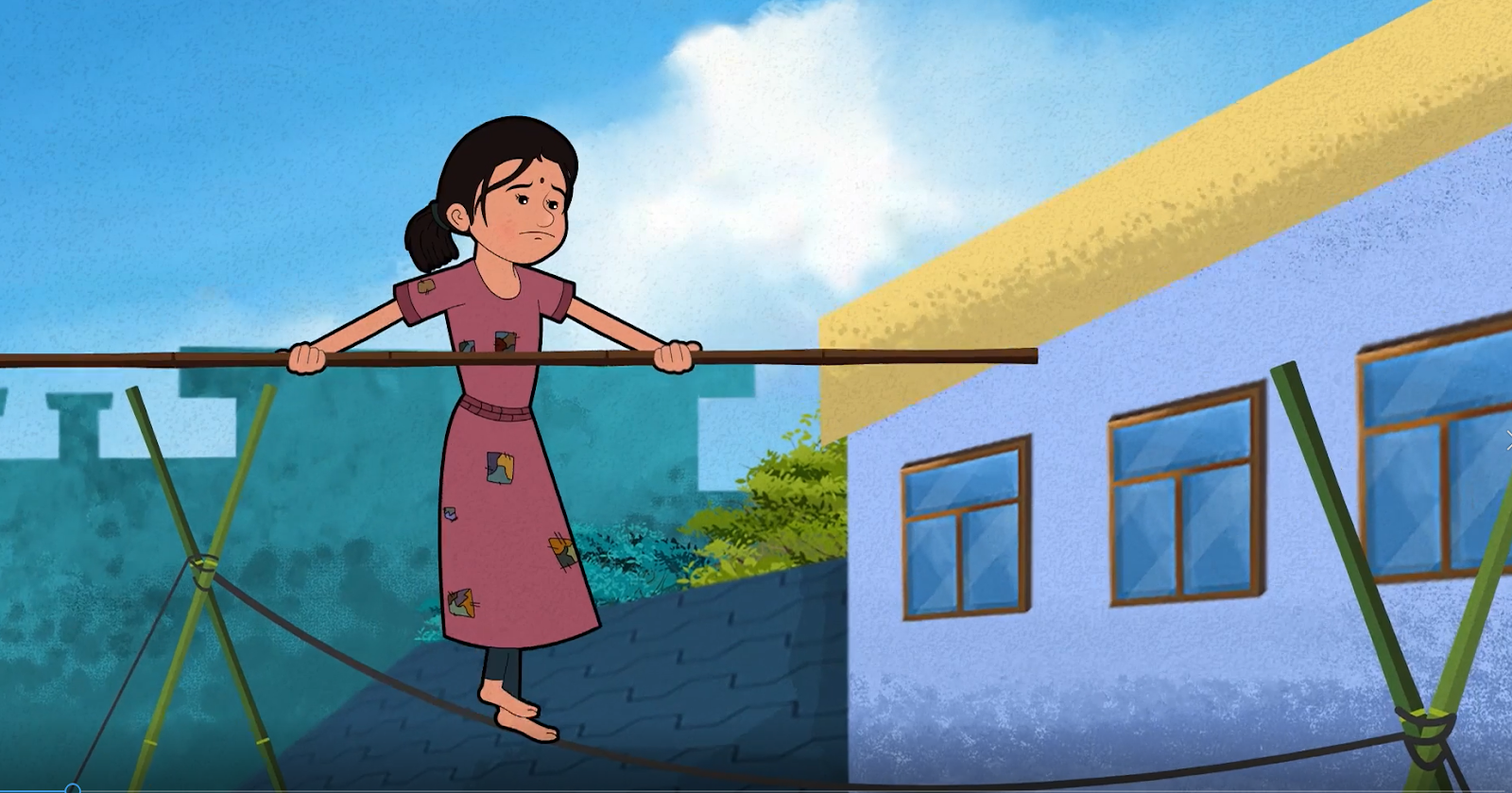
WHEN CHILDHOOD BECOMES A TIGHT ROPE WALK....


Funambulism or walking on a tight rope or wire is a common circus activity in many countries. The Funambulists train for years to balance themselves on a tight rope. In most countries, skilled adult artists perform in a circus equipped with adequate safety measures.

But in India, children as young as 5 years old are trained to walk on a tight rope tied on poles roadside often without sufficient safety measures.

In 2011, the Supreme Court banned circus activities like performing high wire stunts and juggling for children under the age of 14.  The Supreme Court also directed the Government to rescue children engaged in such activities and rehabilitate them. Despite the ban, children are engaged in such activities.

CHILDLINE received a call from a concerned adult on 1098 informing about a 5-year-old girl walking on the rope and performing dangerous stunts near the railway crossing, Mukthiyar Ganj, Satna, Madhya Pradesh.  The girl’s family was begging for money from people who gathered to see the activity.

On the basis of the information given by the caller, the local intervention unit rushed to the spot. The CHILDLINE team found that the entire family was engaged in rope circus activity. They informed the Child Welfare Committee and the District Child Protection Officer (DCPO) who ordered the CHILDLINE team to rescue the child as soon as possible. 

CHILDLINE brought the child and her family to the CHILDLINE office. During the counselling, the child revealed that she has been doing such stunts since last one year. The team produced the child and her family before the Child Welfare Committee (CWC).

The CWC members counselled the family. The chairperson of the CWC warned the family members of legal consequences if the child is found again working and performing dangerous stunts. The family assured CWC that they will take care of the child and enroll her in the school. The local police made arrangements for the child and her family to travel to their native place, Bilaspur, Chhattisgarh.

After a couple of months, CHILDLINE visited the child’s native place. But the child was not there. CHILDLINE does not have any idea about the whereabouts of the child or her family. The team sincerely hopes that the child is in a school and is not working or performing dangerous stunts.

If you come across any child being forced to work or perform any dangerous circus activity, please do not turn a blind eye. Immediately, call 1098 and report the matter.

Disclaimer:  Names and details have been changed to maintain confidentiality as required. 


2 Mar 2020

CORPORAL PUNISHMENT: A CRIME THAT CAN SCAR A CHILDHOOD FOREVER


In our Indian culture, a teacher or a “guru” holds a highly revered position. Teachers play a very important role in raising responsible children. They can transform the lives of their students with the magic of their teaching. A teacher can be regarded as the builder of a good nation.

But what happens when a teacher whom students look up to engages in unfair and harsh means of discipline while teaching? There are a large number of teachers in India who resort to corporal punishment to discipline their students.

The committee on the Rights of Child in the General Comment No.8 defines ‘corporal” or “physical” punishment as “any punishment in which physical force is used and intended to cause some degree of pain and discomfort. The non-physical forms of corporal punishment include belittling and humiliating the child, especially in front of the class.”

Corporal punishment is rampant in our country. Most children do not complain and tend to suffer silently. Students who have been abused by their teachers are most likely to drop out of schools. Prolonged abuse fragments their confidence and scars their lives forever.

In the case of Radha, 16, who faced severe abuse by teachers, has not only affected her mental health but has also injured her hand severely. Radha, resident of Kolkata was studying in Saraswati Devi International Boarding School in Bankura, West Bengal. Her parents are separated. She and her father do not have any contact with the mother after her remarriage.

One day, Radha’s father called CHILDLINE 1098 and informed that she was beaten up by her school teacher, school warden and the son of the school chairman. She was beaten up so badly that her right hand got fractured. She needed immediate medical help, but the school authorities did not help her at all. Her father arrived and took her to the Bankura Sadar Hospital for treatment.

CHILDLINE filed an FIR on the same day at the Bankura Sadar Police Station. The case has also been registered with the Human Rights Commission and they are counselling the child. The accused are currently out on bail. Radha is extremely scarred and worried whether she will be able to appear for her upcoming board exams. Currently, she is living with her father in Kolkata. She will be going to school only to appear for her board exams.

There are many children like Radha who are suffering in isolation. Their self-esteem is being destroyed every day and they don’t know whom or how to ask for help. You can help such children get justice. All you have to do is pay attention to the signs, listen to what children have to say, then pick up the phone and dial 1098….

Disclaimer:  Names and details have been changed to maintain confidentiality as required. 

1 Apr 2012

CHILDLINE Delhi & action plan for abolition of Child Labour


*Sumit Kumar

Growing urbanisation has brought a larger number of migrant populations from Northern States and other parts of countries to Delhi. Delhi in last two decades has changed significantly in terms of infrastructure development and civic amenities. This has also attracted a larger number of children for coming to Delhi in hope of getting good job and to earn money.

It has been conservatively estimated by Government that around 1 lakh children working at different location in Delhi but the estimate by civil society organisation is about 5 lakh children working in various hazardous jobs across the state. While rescue and rehabilitation of these children are extremely difficult as it need involvement of various stakeholders in the rescue operation.

Child Labour profile in Delhi is of two types (NCPCR 2010)

(i) Out-of-school children living with their parents and
(ii) Children who have come from other States without their families

Hence, the Delhi Action Plan for total abolition of child labour would have two strategies. The first strategy is an ‘area-based approach’ for elimination of child labour. Under this strategy, all children in the age group 6-14 years in an identified area will be covered, whether they are in school or out-of-school. All out-of-school children would be regarded as engaged in some form of work and being deprived of their right to education. Children in schools are to be monitored so that they do not drop out and join the labour pool.

According to the estimate (NCPCR 2010), Delhi has 28319471 children in the age group 6 to 13 years, of whom 2747523 are school going and 43735 (3.34%) are out-of-school. The survey conducted by Samajika Suvidha Sangam (Mission Convergence Directorate) found that out of 643315 children in the age group 7-17 years of where 450402 of them are not in schools. According to Sarva Shiksha Abhiyan (SSA), the number of out-of-school children in the age group 6-14 years in North West District was 7219 (whereas the door-to-door survey conducted by NCPCR in 9 slums of Jahangirpuri was 2929.

Perhaps this discrepancy in data is due to the fact that names of children who are out-of-school and school dropouts may be continuing in the attendance registers as enrolled. All such out-of-school children are to be considered as child labourers or potential child labourers who would sooner or later join the labour pool.

Under this background, an affidavit has been submitted by National Commission for Protection of Child Rights (NCPCR) before the Delhi High Court seeking directions to Government authorities on the issue of child labour. Informing the court that rescued children were not being properly rehabilitated, the NCPCR, in its affidavit, stated, "There is no guarantee that all rescued child labourers have been successfully restored to their families in the source states. This is evident from a study of 22 rescued child labourers in which the families of three are not traceable and the addresses of four children were wrong."

The affidavit was filed to inform the Court about the steps taken by the government after a slew of directions were given by the high court for the rescue and rehabilitation of child labourers in the city. The high court had, in 2009, passed a detailed order which modified the existing provisions for better rehabilitation of child labourers. It had given Delhi Police extra powers, which were earlier with the labour department, to effectively eradicate the problem.
*       
The Commission proposed an ‘area-based approach’ to be initiated as a pilot in the North-West district. The action plan for abolition of child labour formulated by NCPCR was accepted by Honorable High Court. The Court has issued an order dated July 15, 2009 with a clear role and responsibility of different allied system and helping them in areas of convergence.

The action plan has helped CHILDLINE team immensely to identify, plan and conduct rescue across Delhi. It has also helped in restoration and rehabilitation of these children through ensuring the role of state government in concerned states.

In last two years, CHILDLINE Delhi rescued more than 500 children. In the year 2010-2011, CHILDLINE 1098 received 696 cases reporting child labour at different locations. While the judgment has developed a way forward in case of child labour it has also left various question unanswered. The judgment directs the Government of Delhi to create various structures like to address the issue of child labour in district and state level.

In light of the judgment, the District Level Task Force was formed to handle Child labour cases and CHILDLINE is a regular participant sharing its concern about child labour. CHILDLINE participation in these forums has also steered various important discussions. In the last two years CHILDLINE have received most difficult cases with complexity involved in it. The team has developed a cohesive relationship with district administration for handling cases of labour.

Though the District Level Committee has been formed but the State Level Steering Committee on Child labour is still not exists. In absence of the said committee at state level it has not been possible to take forward unresolved issues for redressal at the district level. CHILDLINE Delhi witnessed an average delay more than a month in each rescue cases. Most difficult situation arise when child labourer is physical abused and CHILDLINE has to conduct the rescue on urgency without labour department which has been questioned by Department of Labour and Child Welfare Committee (CWC).

The quality of First Information Report (FIR) filed was also questionable as it does not include requisite section and law as per the merit of case which makes the case weaker during prosecution. Filing of First Information Report (FIR) has been also been an issue of concern as the Action Plan mandates the Police to file FIR in cases of Child labour under specific section of JJ Act, CLPRA, and IPC.

CHILDLINE data on child labour rescue shows that FIRs have been filed in less than 40% cases of Child Labour and bonded child labour apart from relevant section of Juvenile Justice (Care and Protection) Act, 2000 and Indian Penal Code, 1860. In all cases of Child Labour received by CHILDLINE more than 90% children were from other states and were trafficked by agents for labour to Delhi. As a process FIR should also include the name of traffickers who have brought these children. There definitely has to be punitive action against the traffickers.

Implementation of the Judgment, M C Mehta Vs State of Tamil Nadu and Others: The greatest challenge at present is the implementation of the judgment. The child labour welfare funds were constituted after the judgments but mechanisms to provide relief and compensation to the survivors of child labour has yet not been operationalised.Children are being rescued and restored but the amount received as recovery from the employer as well as the government share of Rs 5000 per child going to this fund is not contributing in any way to the rehabilitation of the child.

Delhi Action Plan on abolition of child labour exhibits specific role and responsibility of labour, Police, NGOs and WCD department which includes filling of challans, specific sections and acts of different laws and coordination mechanisms. It is crucial that there is a need to organise regular training with these stakeholders which includes better role clarity, experience. Instead of all these exercises CHILDLINE Delhi is still fighting hard with administration for conducting rescue for more than 120 cases alone pending in South Delhi.

Sumit Kumar is currently working as Programme Coordinator with North Regional Resource Centre (NRRC), CIF

29 Dec 2011

Child Labour in India: Issues &Concerns

Child labourers have considerable stake in India’s GDP with near to eleven per cent of the total workforce being the children finds Nishit kumar, Head, Communication and Strategic Initiatives, CHILDLINE India Foundation.


Over the past ten years of about eight per cent per anum GDP growth, there has been widespread talk of India’s Demographic Dividend (share of population in 15-60 age group) arising out of the young average age of India’s population.


The theory is that the small the share of population in the below 15 and above 60, the greater the contribution of the productive population to GDP growth. Among the propagators of the India Demographic Dividend story are Dr. Manmohan Singh, Hon’ble Prime Minister and many notable figures around the world. Many present the story as though the demographic contours of India have been carefully sculpted through policy, management and governance. Far from it, India has a history of ignoring demographic trends and not preparing for it.

The 2001 census threw up the figures that children under 18 accounted for almost 43% of India’s population of about 450 million. Yet, inspite of the first UPA government manifesto of a commitment of nine per cent of annual Union budget for children, even as of 2011, a little more than four per cent is allocated towards children. In this gap between the needs of the world’s largest children’s population and (amongst) the world’s lowest per child budgets that is allocated in India is the story of Indian Children’s contribution to the GDP. The story of Child Labour in India.

The story is best unfolded by an examination of the Census data on child Labour. The Census data for child Labour has traditionally been presented as children upto 14 years:

Year
Child Labour as reported by Census
1971
10753985
1981
13640870
1991
11285349
2001
12666377

The figure of 12.67 million as child labour has been widely reported. The department of Census, Government of India has just published provisional census data for the Census of 2010. (http://censusindia.gov.in/2011-common/censusdataonline.html) .

Once again the age wise data reported by the Census is 5-9 yrs, 10-14 yrs and 15-19 years. Since the Juvenile Justice Act, 2000 has pegged the age of children, in line with international conventions, at 18, we can no longer overlook the population of working children in the age group of 15-18. However, the Census does not show this breakup.

Population of Main workers in Census, 2010:

All India Main Workers
 Male
 Female
 Total
5-9 yrs
501890
308209
810099
10-14 yrs
3070300
1858116
4928416
15-19 yrs
15098122
5448644
20546766
Total India
18670312
7614969
26285281
% of child labour to total  workforce
7.78%
10.47%
8.41%
Total workforce (all ages)
239923441
72708941
312632382

As can be seen in the table above, children upto 14 total

The Census also reports population of children in Marginal workers of India:

All India Marginal Workers
 Male
 Female
 Total
5-9 yrs
495494
534927
1030421
10-14 yrs
2711397
3146172
5857569
15-19 yrs
5821090
5929351
11750441
Total India
9027981
9610450
18638431
% to total  workforce
25.90%
17.67%
20.89%
Total workforce (all ages)
34859808
54374298
89234106

Lets us see the picture when both Main workers and Marginal workers are combined:

All India Total Workforce
 Male
 Female
 Total
5-9 yrs
997384
843136
1840520
10-14 yrs
5781697
5004288
10785985
15-19 yrs
20919212
11377995
32297207
Total India
27698293
17225419
44923712
% to total  workforce
10.08%
13.55%
11.18%
Total workforce (all ages)
274783249
127083239
401866488

If you take the children up to 14, the total number of children in the workforce is 12626505. Almost the same as previous census of 2001. The real picture emerges when you start adding the child work force in the ages 15-19. One could argue that 19 year olds ought to be excluded from the calculation of child Labourers. However the Census does not, as yet provide that data. However, a detailed analysis of the same shows that vast bulk of 15-19 yr olds have not completed 10th. So, they have been in the workforce before they turned 18. For the sake of discussion we have to include this age group (15-19) in the workforce.

The shocking news is that 11% of the workforce of India is child labour. One in every 10 workers in India is a child! If you allocate a tenth of India’s GDP to this share you can see India’s Child Labour has a stake in India’s GDP.

A detailed analysis of the various sectors presented in the Census data for both main and marginal workers clearly shows that some sectors are more prone to child labour than others.
What can be done about Child Labour? In 1979, the Government appointed Gurupadswamy Committee studied the issue of child labour and observed that as long as poverty remains, it would be difficult to totally eliminate child labour and hence, any attempt to abolish it through legal recourse would not be a practical proposition.

The Committee recommended a ban on child labour in hazardous areas and a multiple policy to deal with the problems of working children. Based on the recommendations of Gurupadaswamy Committee, the Child Labour (Prohibition & Regulation) Act was enacted in 1986. The Act prohibits employment of children in certain specified hazardous occupations and processes and regulates the working conditions in others.